July Updates
Roadside weed-eating and road repair from summer storms made up most of the work in July. This summer’s storms have been more intense than in previous years. Ideally, the roads would be scraped and repaired after a good rain so that the gravel is easily scraped and moved around. Afterwards, dry weather and four-wheel drive road traffic help to pack the loose gravel so that it doesn’t wash away immediately after scraping. Unfortunately, this summer’s continuous downpours have not been ideal. This has resulted in more road scraping than usual.
August Work
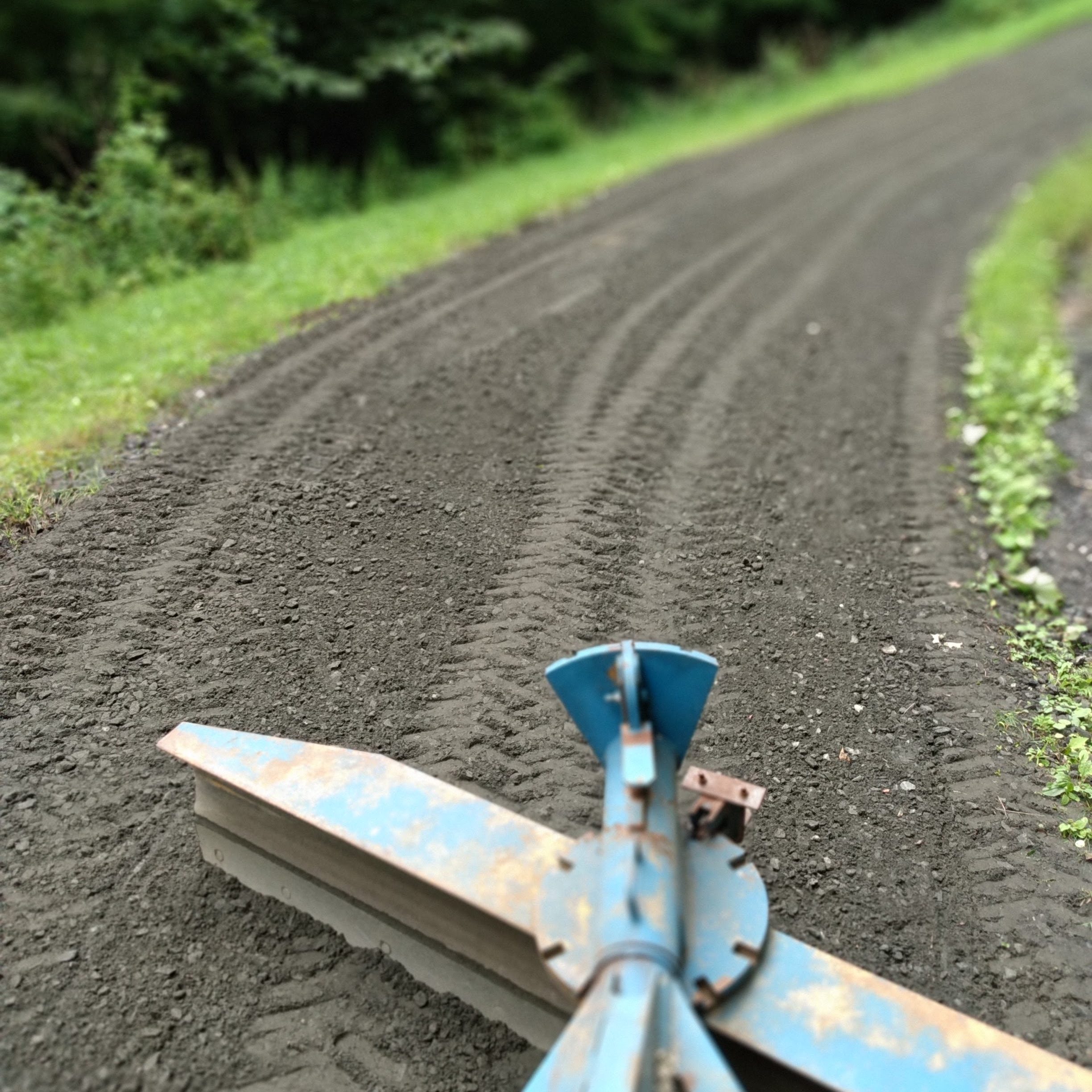
Besides the usual summer roadside weedeating and road scraping, we have also started shaving down the sides of the roads along our ditches. Some of our ditches drop straight down from the side of the road, thus creating a safety hazard. Over the past few years, there have been a number of vehicles drop off the side of the road into a ditch and then not be able to get out. Using the tractor, we have been able to grade down some of these steep drop-offs, thus creating a more gradual, safer grade down from the sides of our roads to the ditches
Mid-Summer Flowers
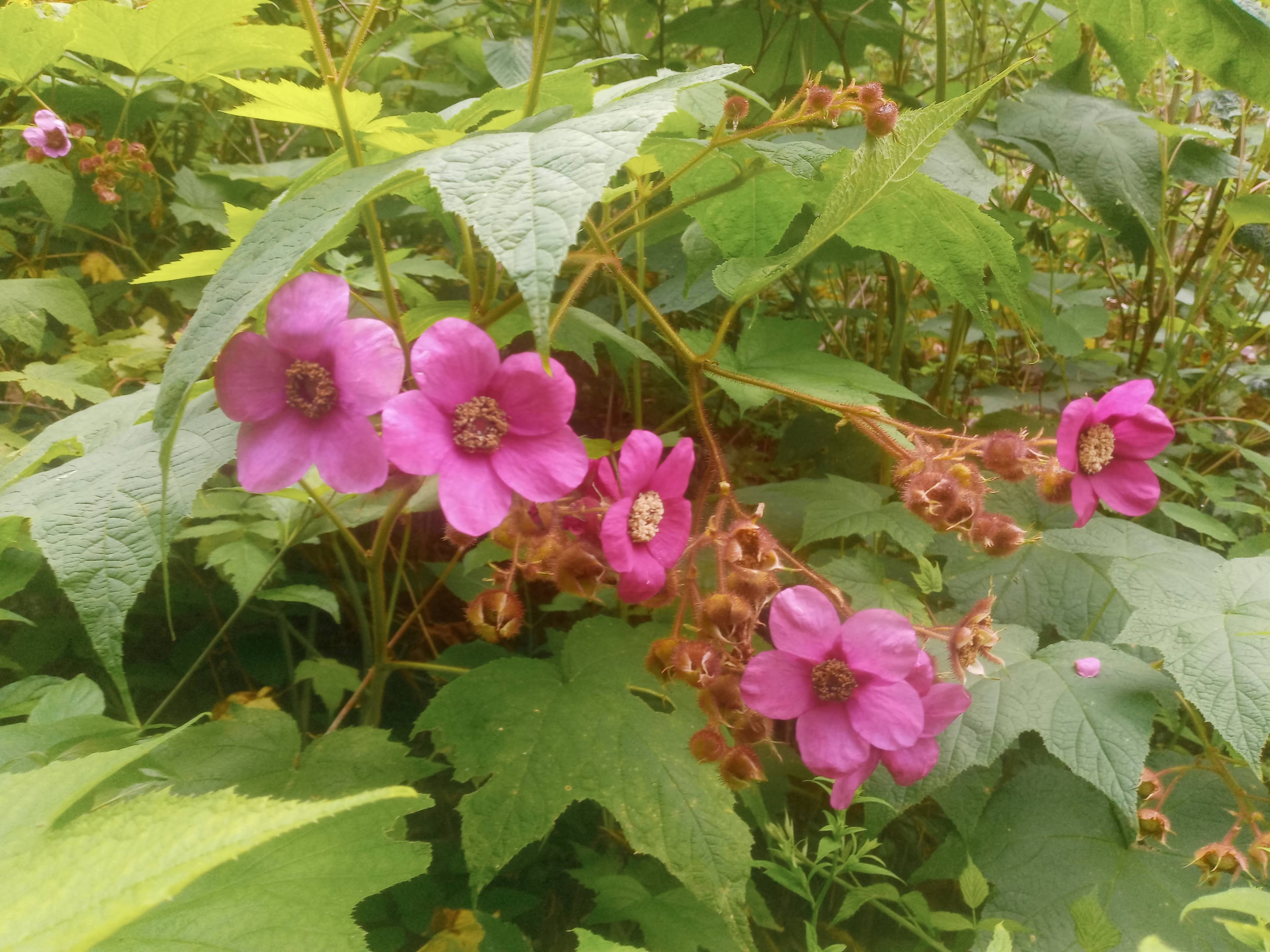
Below is a photo from our roadside of a native raspberry. The berries are pretty tart, but they can be sweetened with sugar to make preserves. This variety doesn’t have any thorns and the leaves resemble that of maple trees. The flowers and berries attract butterflies, bees and birds.
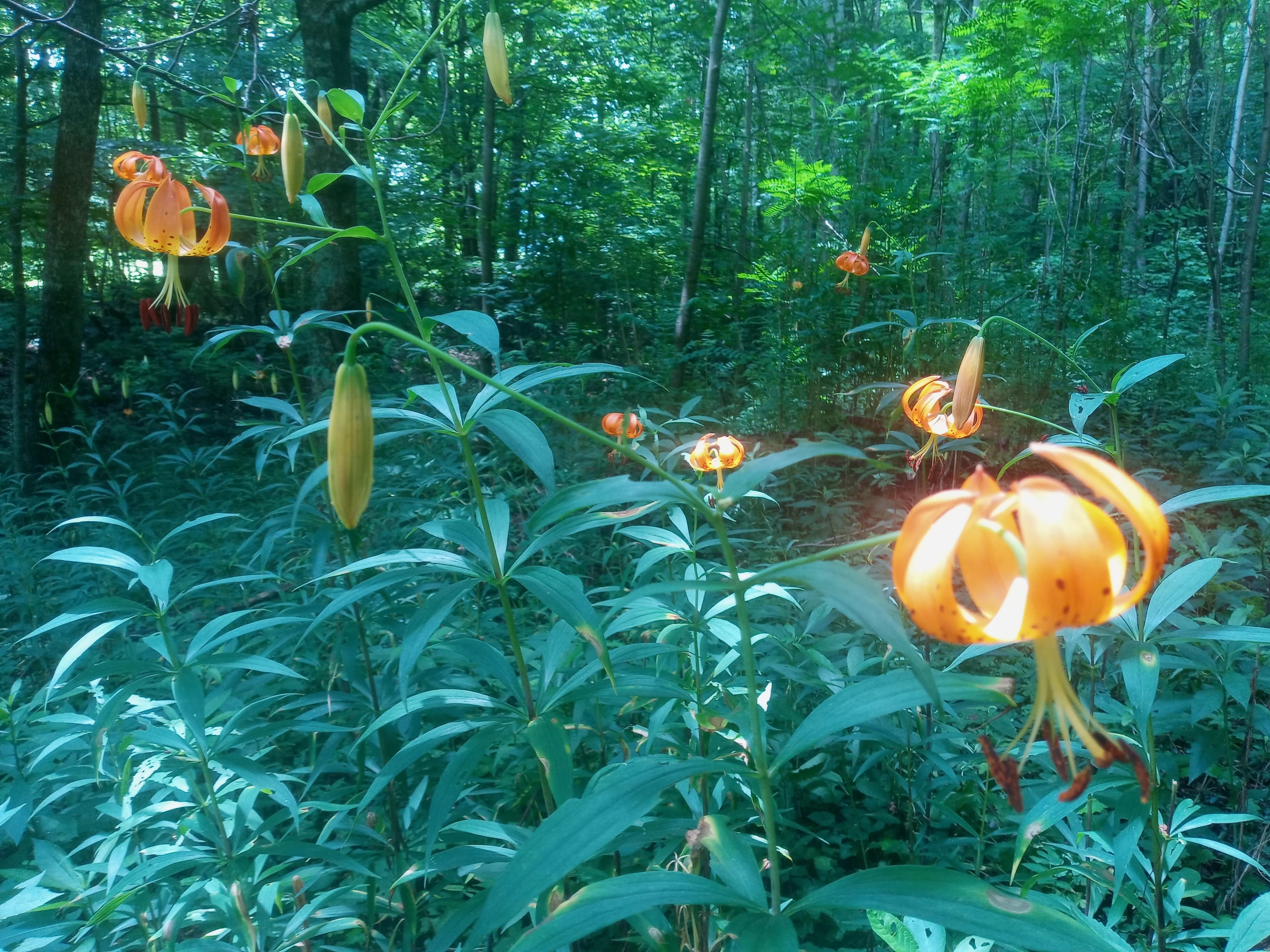
Another native roadside attraction is the Turk’s Cap Lily (below). They get their name for their unique flower shape that some say looks a Turk’s cap. Personally, I couldn’t tell you what kind of cap a traditional Turk wears, but that’s what they say this flower resembles. Native Americans made soups out of the bulbs of these plants, but please leave them so that the hummingbirds and butterflies can enjoy them.
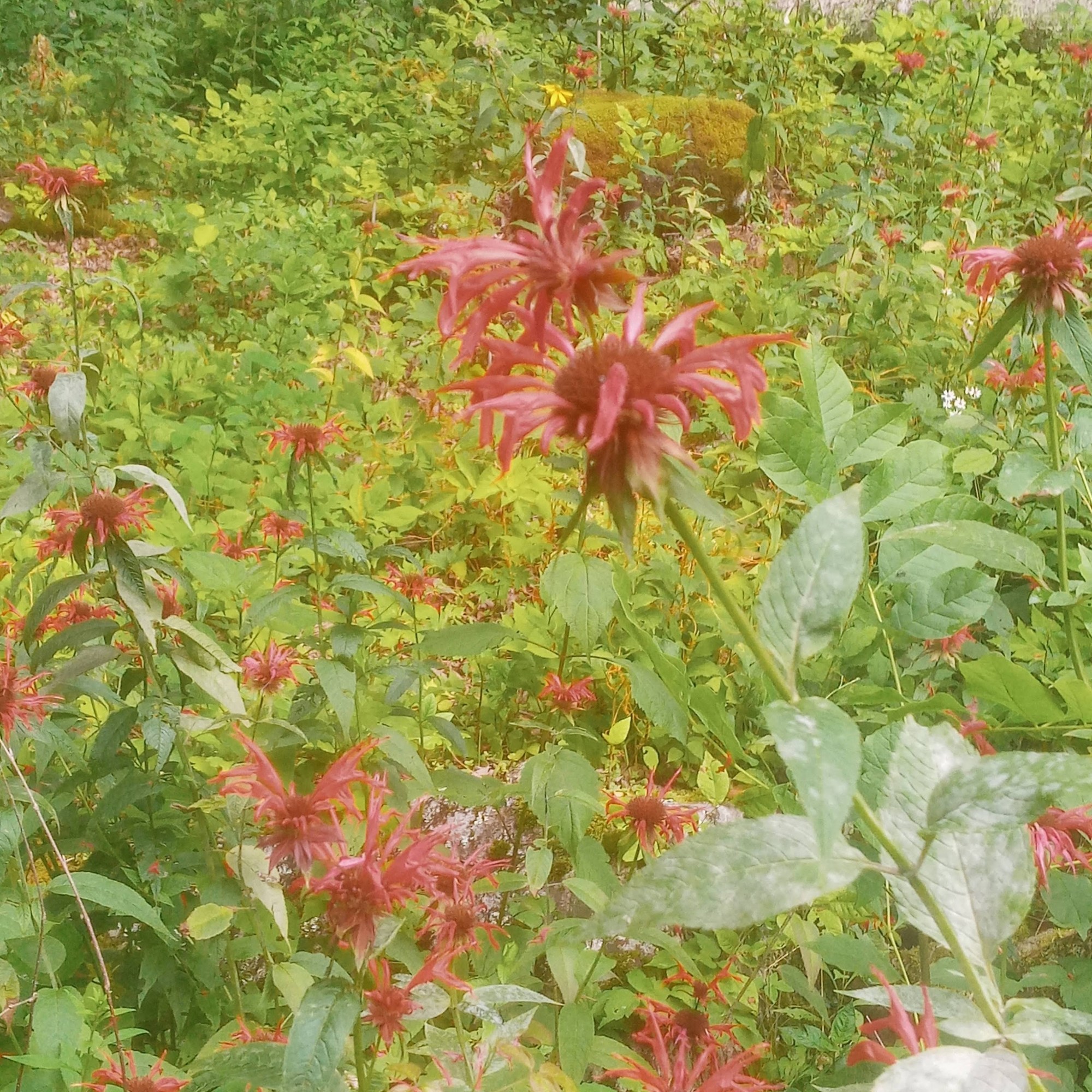
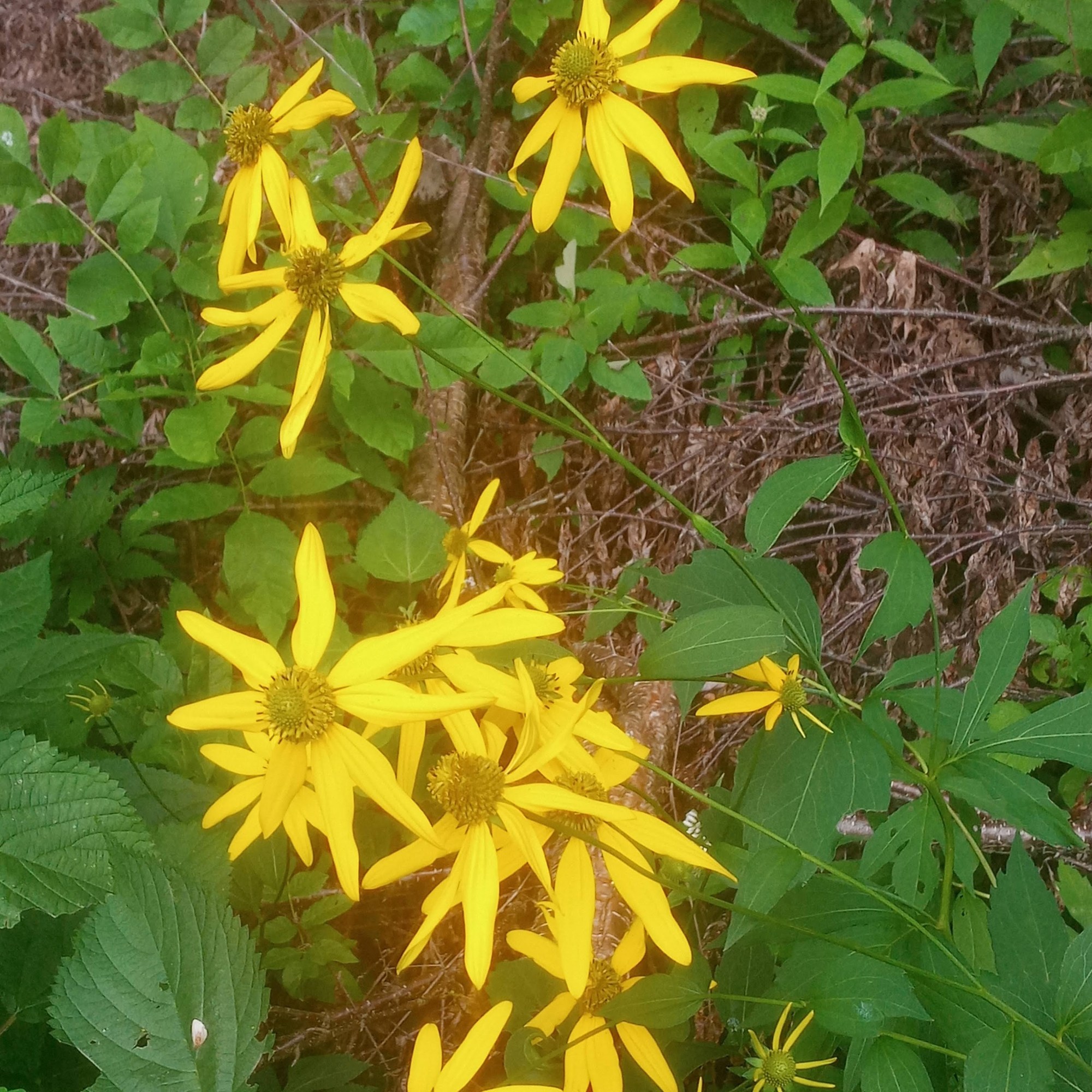
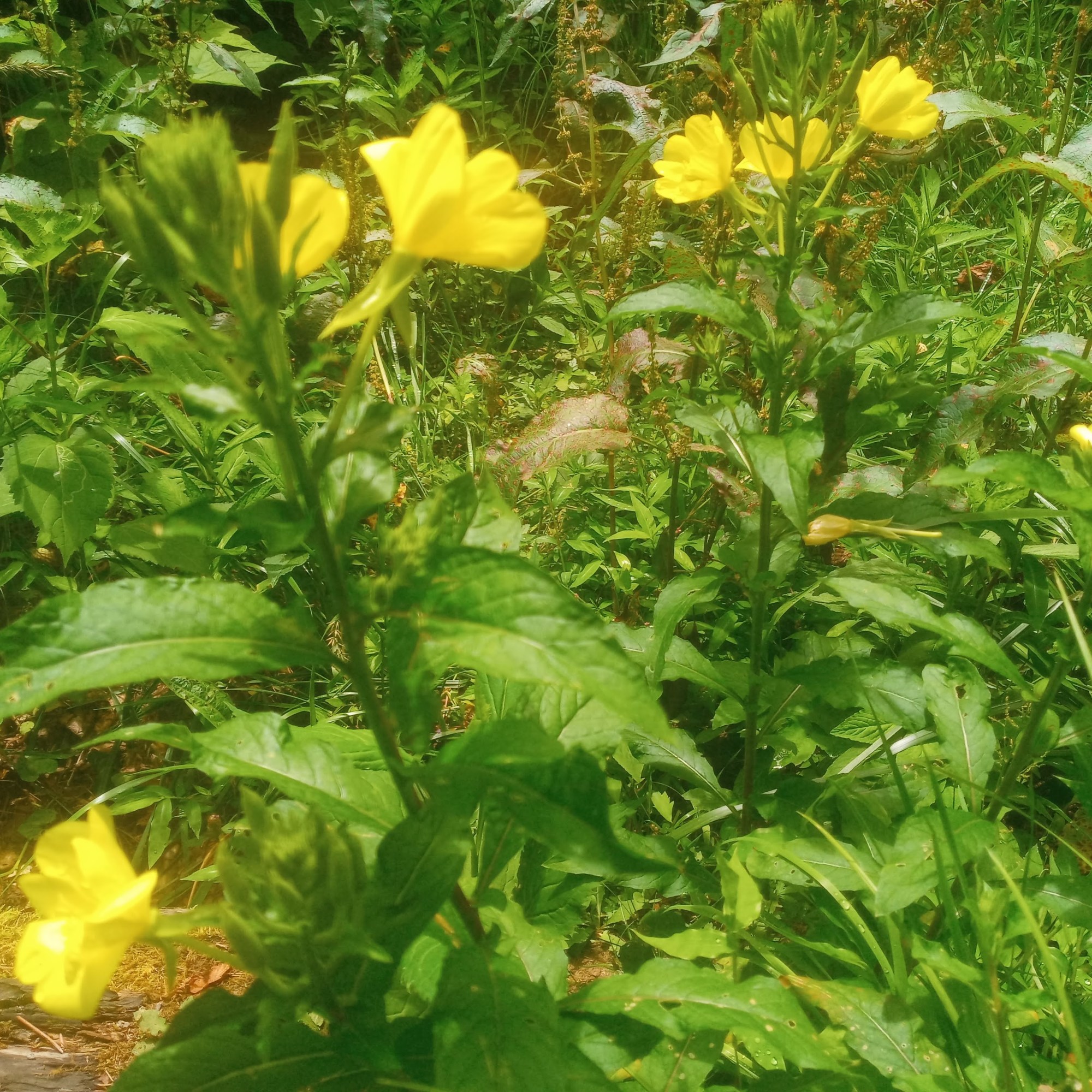
There are countless other wildflowers that are in bloom during our summers at Amber Ranches. The photos below were taken from our HOA roadsides…
Bee Balm (Top left), is a great native wildflower which is named for the resin it produces to relieve the pain of bee stings. The leaves can be brewed into a minty flavored tea and the flowers are great for insect pollination.
Wingstem or Yellow Ironweed (Top Middle), is another native flower that serves as a host for moth and butterfly larvae.
Evening Primrose (Top right), is a native that only blooms during the night. I was lucky enough take this photo in the evening as it was gradually opening up.
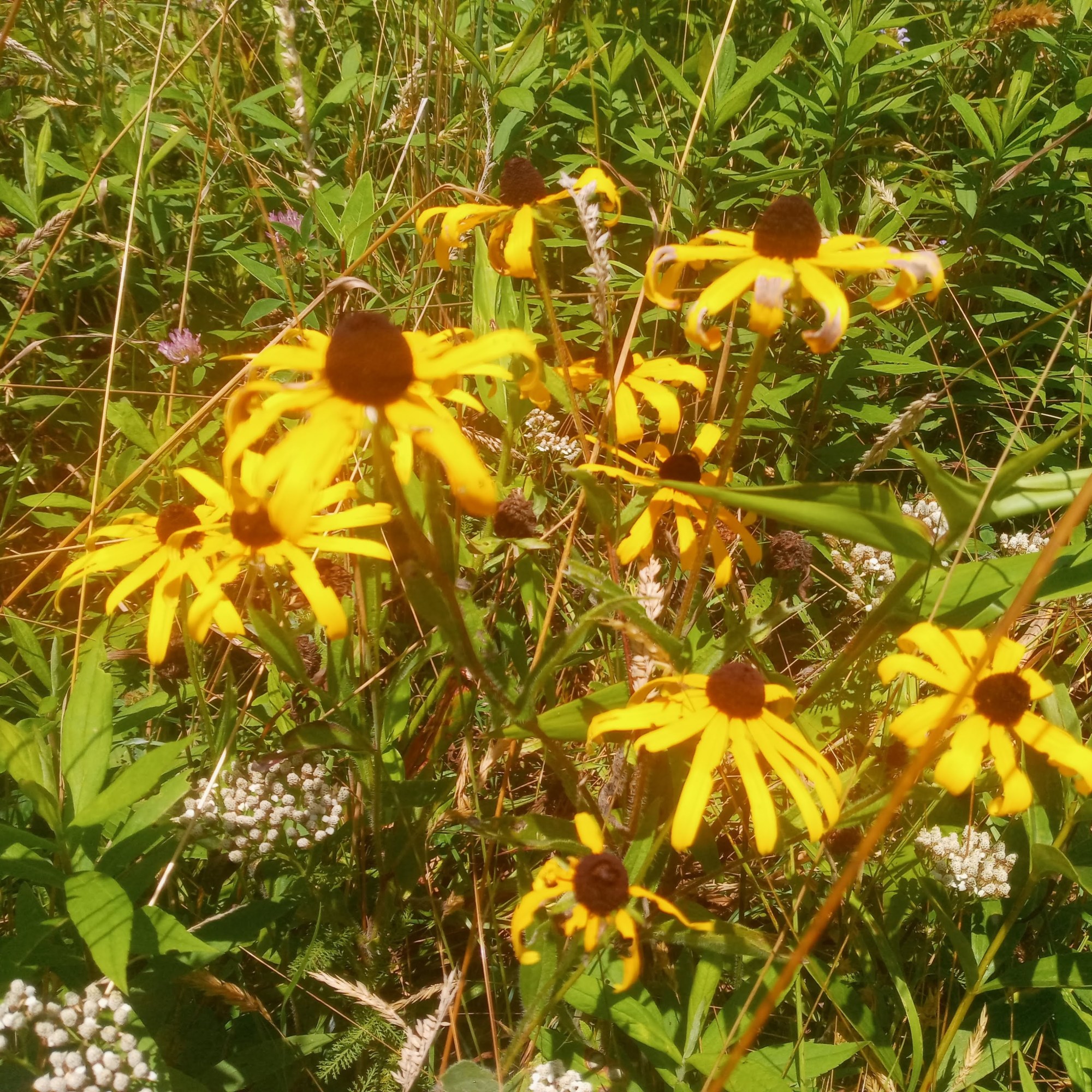
Black Eyed Susan (Bottom Left), is another native that is named for its dark brown or black center which resembles a black eye. These flowers are also wonderful pollinators and are the food source for many birds once the flowers go to seed.
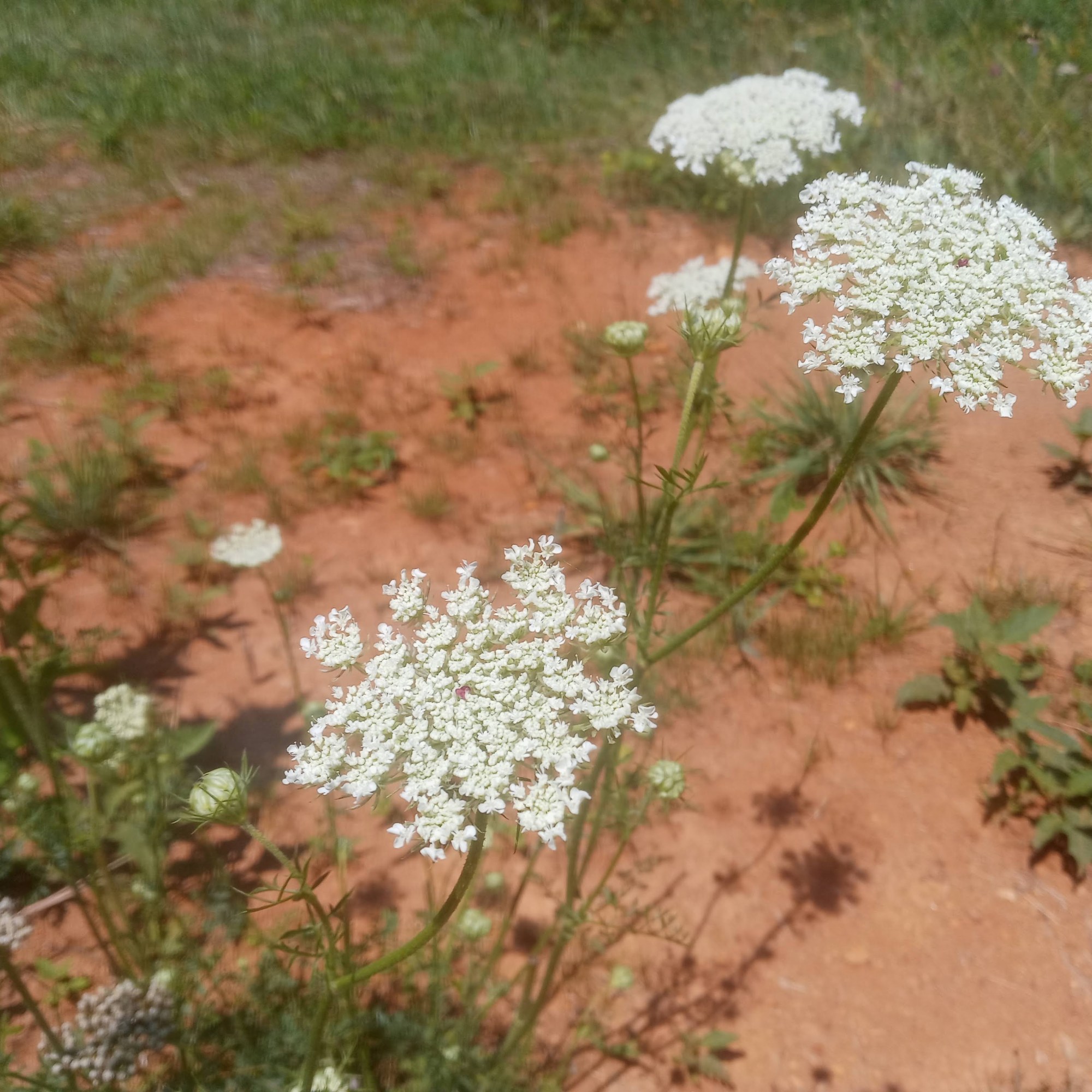
Wild Carrot or Queen Anne’s Lace (Bottom Middle), is a non-native invasive species that is originally from Europe and Asia. It is thought that this species is the ancestor of all modern cultivated carrots. However, the root of this plant can only be eaten before the flower appears due to the root becoming hard and woody.
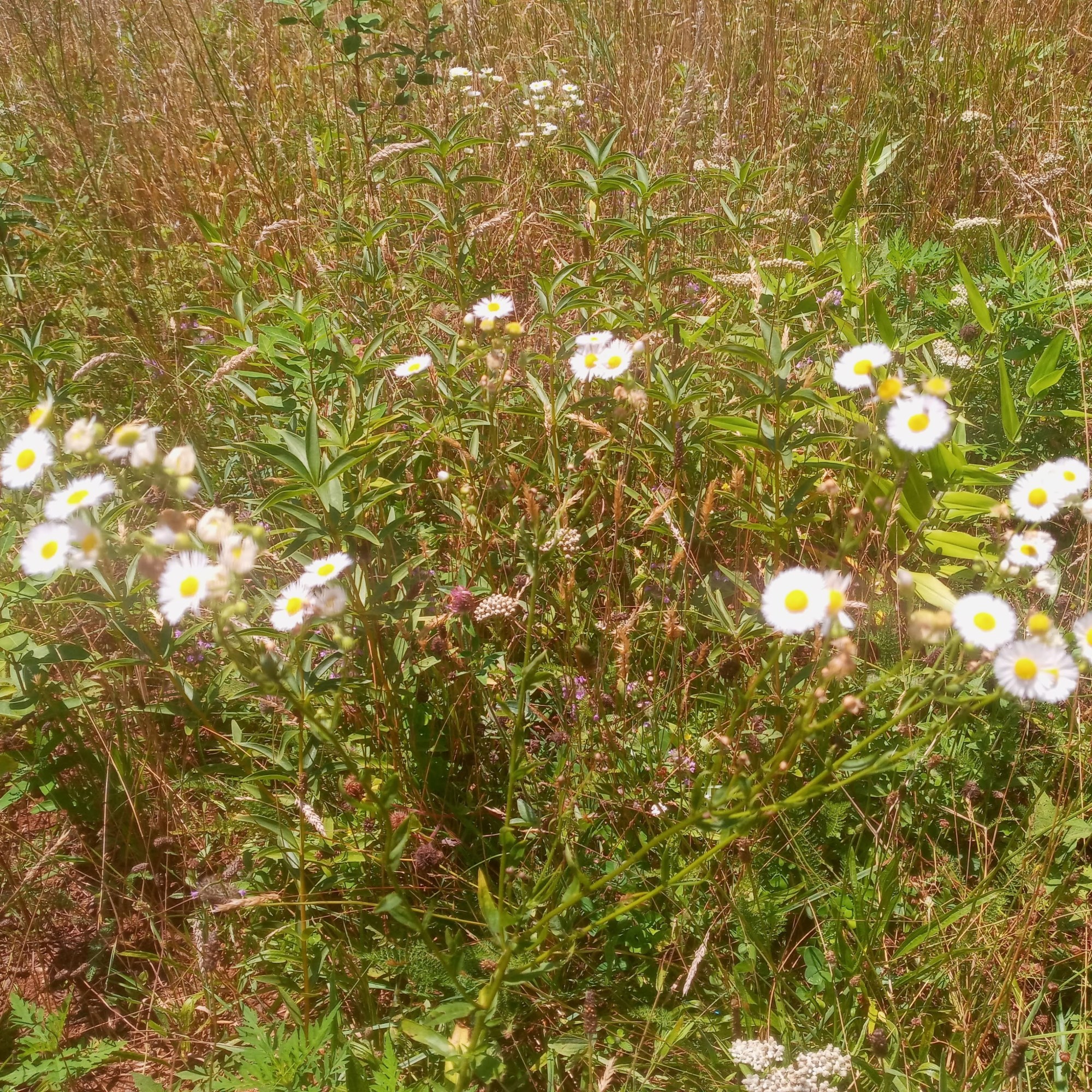
Prairie or Daisy Fleabane (Bottom Right), is a native daisy that is named for the belief that it drives fleas away. However, this has not been proven. The flower is edible, but not commonly eaten.
 Hardin Brothers Landscaping
Leave a comment